I was rushing to meet a friend when I bumped into Doğa, the co-founder of Öktem Aykut Gallery. We shared a quick “hi” and chit-chatted about how it had been long since we last saw each other. He just shared his invitation to the new exhibition opening on Saturday. I hesitated, trapped in a cycle of health issues that had distanced me from my usual routine—unaware that this evening would shake me out of my solitude.
I was not planning to go out on Saturday. Instead, I planned to light a candle, put on soft music—maybe some Alicia Keys—and prepare my favorite Rooibos tea with a touch of cinnamon. I would focus on resting, detoxing, mindfully loving my body, and embracing the lightness of solitude. What a perfect weekend I dreamt of!
…
As John Lennon said, “Life is what happens when you’re busy making other plans.”
…
I arrived at the exhibition opening earlier than the officially stated time. My timing was perfect. I was one of the early birds, and the space was empty and silent. I knew it would get louder as it got crowded, silencing the voice of the artwork hanging on the walls. I turned to the information stand, realizing I knew nothing beyond the verbal invitation I had received.
I found the plain paper prepared as an informative document for the audience and started reading it. The title read as Silva Bingaz, Opus 3c. Those who visited the gallery know very well that the elevator doors are facing a wall blocking the exhibition area to be seen immediately, serving as a passage from the outer world to this calm and white exhibition space.
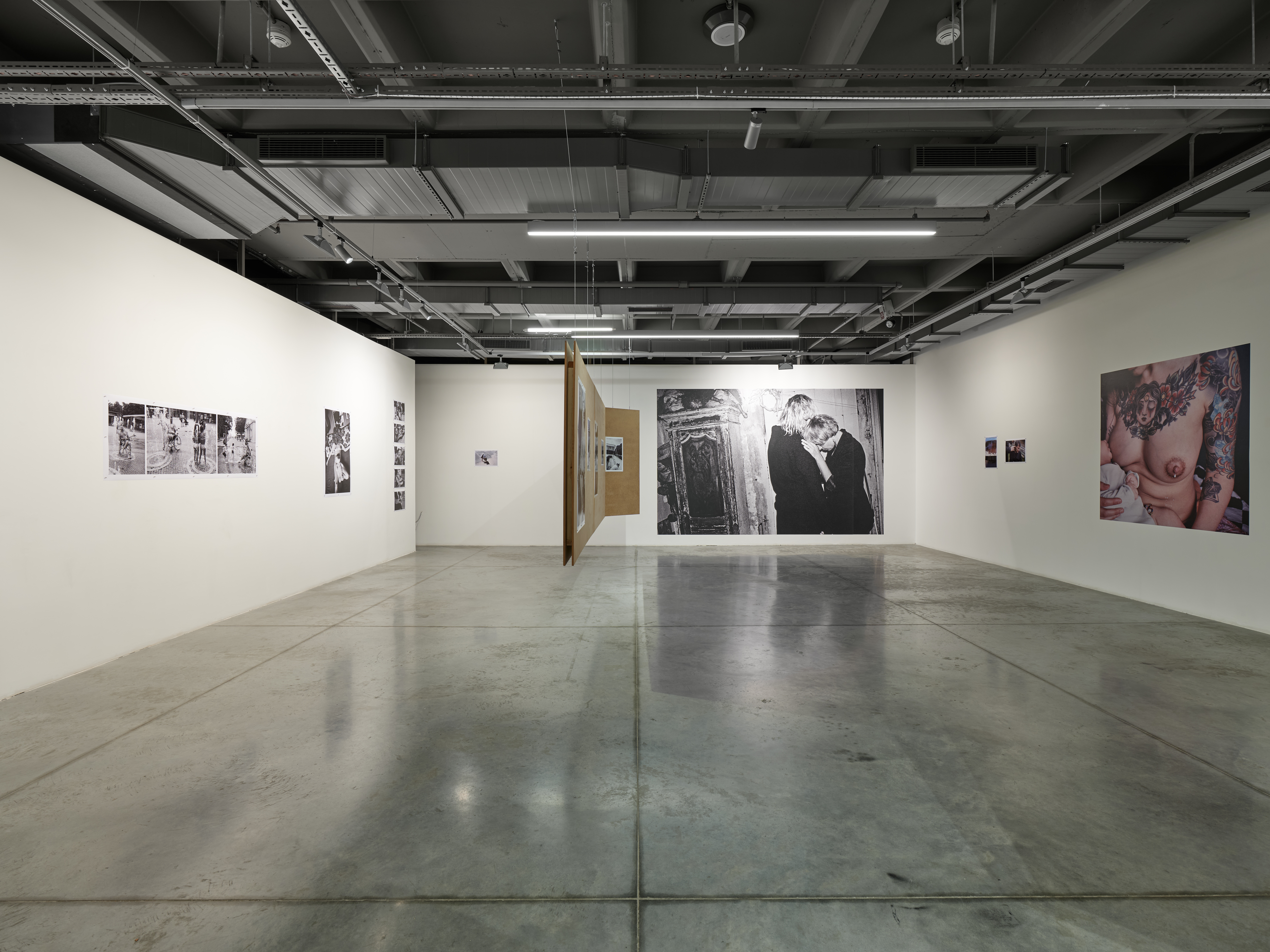
At the end of the wall, a black-and-white image of an intertwined couple caught my eye. I stopped reading the text and locked my gaze on this powerful image, radiating sensuality. Though the couple appeared nearly naked, the image was not erotic but a tender depiction of pure love and intimacy, inviting the viewer to witness their light moment. The linearity of the curves of the couple’s body dissolved into an abstract form after a few seconds of staring at the image.

Silva Bingaz, Untitled (From the series Opus 3c), 2017. 105 x 70 cm. Courtesy of Öktem Aykut Gallery.
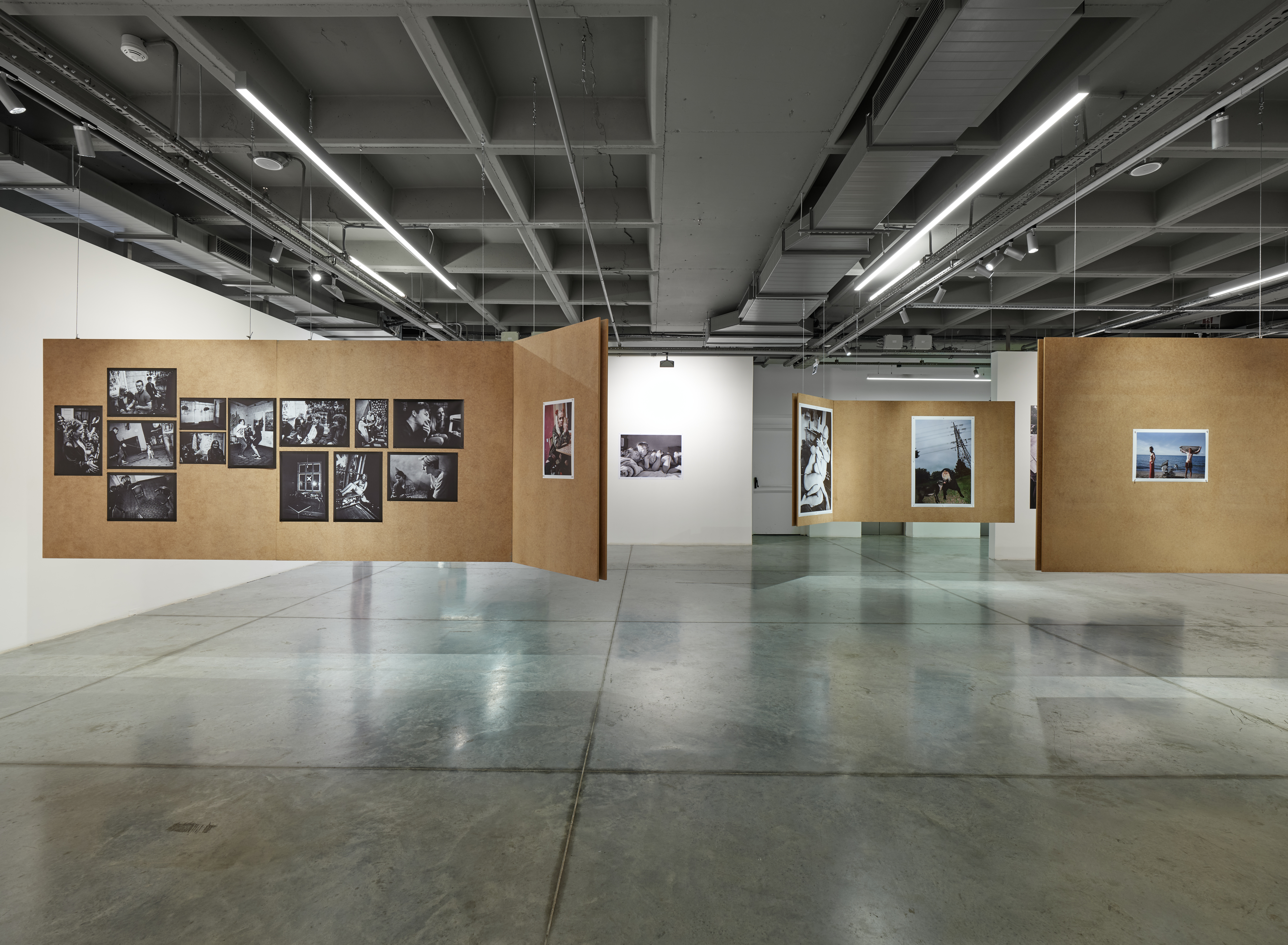
As I turned around to see the exhibition space, I realized that the space was not divided by plasterboards. Instead, large wooden surfaces suspended from the ceiling were preferred to place these powerful images, allowing the viewer to follow a labyrinth-like path in the space to get lost among all these humane feelings. It was still possible to see who was on the other side of the wall, seeing the walking legs, occasionally encountering the faces.
There it is, a tattooed mother breastfeeding her baby while a drop of milk comes down from her other nipple. The tattoo on her chest depicts a Medusa-like woman’s head surrounded by flowers overflowing toward her shoulders and arms. One of her eyes is open, and the other is closed with a tear drop coming off, just like the milk drop. This symbolically heavy image reflects the hardships of being a mother, delivering a baby, and instinctively loading motherhood onto a woman’s body. As one would expect, the tattooed woman might not suit the accepted mother’s appearance or obedience, just like Lillith represents. She must have been a tough woman to endure the endless pinch of the tattoo machine. I wondered if she also dropped a tear while the needles were coloring her skin.

Silva Bingaz, Untitled (From the series Opus 3c), 2017. 120x 120 cm. Courtesy of Öktem Aykut Gallery.
Out of the blue, Animal Instinct by The Cranberries started to play in my head. It was as if the raw emotions in Bingaz’s images had triggered a dormant memory, syncing perfectly with the melancholic strains of the song.
Suddenly, something has happened to me
As I was having my cup of tea
Suddenly, I was feeling depressed
I was utterly and totally stressed
Do you know you made me cry?
Do you know you made me die?
All the images I looked at shared a common ground: human instinct, humane sentiment, birth and death, and the transformative character of the interplay between feminine and masculine.
I passed through several images, some large and some small until I reached this gigantic print of two women, one leaning her head on the shoulder of the other. The bracing figure gently and reservedly hugged the other. They seemed to share thoughts about a heavy or light issue.

Silva Bingaz, Untitled (From the series Opus 3c), 2017. 80x 120 cm.
All of the images display the background only partially. It is hard to identify the environment around these figures. One can only guess if it is a room or an outdoor area. Yet, these photos are not mere portraits reflecting the character of the individuals. The photographer witnessed the candid, uncensored, or not manipulated moments of the people she pictured. It is challenging to allow a stranger in a private area to bear oneself courageously in the gaze of a stranger. Even though our perception of privacy is dramatically changing with social media, these photographs are not an exploitation of exposure or a voyeuristic attempt.
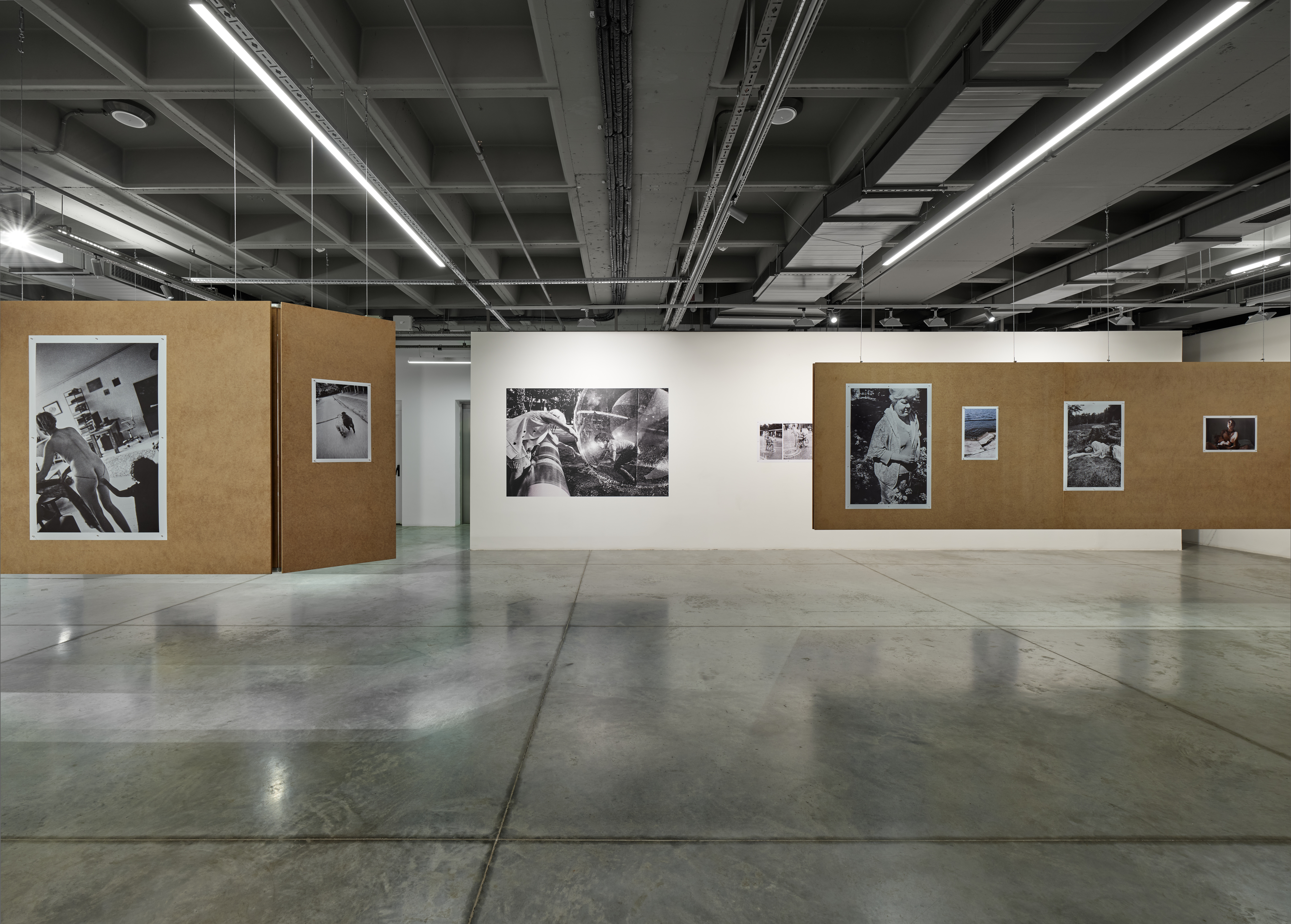

Silva Bingaz started her Coast project in 2002 in İstanbul, focusing on the “primary forms of being:” birth, death, love, femininity, and masculinity. She then traveled to Tottori Prefecture, Japan, to realize the project’s second phase, following the same approach as in the first phase. She wanted to present the primary forms of being in another location. Tottori Prefecture had the lowest population density among the prefecture capitals in Japan, and it is famous for its highly populated city of Tokyo. I assume Tottori allowed her to develop close relationships with individuals she pictured, as it would be challenging in a metropolitan city of the country.
Bingaz converted the Coast project to a trilogy with Opus 3c. While the photographer acknowledges that Opus 3c diverges slightly from the original Coast project, it remains anchored in its core exploration: challenging the historical realities that constrain our existence. She realized Opus 3c during her visits to Latvia in 2017. Along with the primary motivation of the Coast series, these photographs also shed light on her interest in mythology. The viewer can trace the symbols alluding to Medusa or the emblem of Baltic religion on the pictures. She successfully uncovers the power dynamics between sexes and fragility. The photographs give the viewer warmth and acceptance while inviting them to the private realm.
Silva Bingaz’s Opus 3c can be visited at Öktem Aykut Gallery until March 22, 2025. With only three solo shows in İstanbul over the past decade, this rare opportunity to experience Bingaz’s evocative work firsthand is not to be missed.
 Burak Mert