Capitalism, as an economic system, reached a point where all aspects of life can be transformed into commercial material, a good to be bought and sold. The fact has been criticized widely by numerous scholars and theorists, as well as regular individuals whose focus is not on understanding the systemic patterns and converting them into theories. Arts and culture are also subject to commodification under this expansive economic system. First, arts and culture are now producing commodities to be traded; second, they are soft power tools in terms of being a catalyst for the desired social change. In this text, I will argue that it is vital to find a balance while employing the arts as a tool for social change.
The industrial revolution marked a milestone in human history, grounding the current economic system, shifting paradigms on health, agriculture, environment, entertainment, and cultural production. Humanity is now experiencing the outcomes of the consumption-oriented system on a higher level. The reason is simple: the adverse outcomes have accumulated to a point where we cannot neglect them. For the past couple of decades, humanity has come to realize that the gas emitted through chimneys not only pollutes the air but also kills everything on Earth.
The Industrial Revolution also enhanced the level of mechanisation, resulting in mass production, creating the demand for the supplied goods and inventing technologies to increase the production efficiency, in other words, decreasing the costs. The advancements dramatically shifted the paradigm of the arts. For example, the technological developments brought the invention of the camera, recording sound on vinyl, then on film tapes, which created the giant industry we know as cinema. The production surplus raised questions about the relationship with industrial materials. Artists belonging to the DADA art movement were the ones who used these industrial materials as part of the artwork. Even Duchamp used a thrifted urinal by positioning it as a modern sculpture; the gesture monumentalized an everyday object. Of course, the artistic interventions following Duchamp recalibrated the definition of the arts and our perception of artwork, as well as our aesthetic taste. As a result, unexpected dynamics in the art market were created. The new principles of the free economy began to contradict the artistic value derived from labor and production processes. The artists did not have much to say about the value of their work, but the demand in the art market dictated the value and the type of works to be consumed.
Numerous theorists have widely criticized the commodification of the arts. Heidegger was one of the first thinkers who anticipated the shift in the dominant paradigm of modern times. He argued that humans themselves have become a resource, akin to natural resources.1 It would be naive to argue that the arts can be isolated from the fact. Adorno explained the dynamics of the culture industry, presenting how arts and culture became commodities to be consumed by a larger number of people. The arts are not an elitist, exclusive endeavor to enjoy, which requires a certain level of intellectuality. The masses and their taste lead the trend in the arts and decide what is valuable to consume. When Benjamin wrote his book “The Work of Art in the Age of Mechanical Reproduction,” he highlighted the core issue of artworks reaching the scale of economics due to their reproduction by the new technological devices, such as the camera. Seeing a sculpture in situ creates an aura around the artwork. But now, anyone can see an image of the same sculpture, anywhere, anytime, under any condition. Removing the context of the surrounding environment from the art piece erodes its aura, leaving a void of meaning behind, reducing the work only to a non-functioning material. We are in a time of a clash between quality and quantity, body and psyche, commodified material and spiritual experience. While writing this text, I came across Ali Akay’s article on how the market determines the value of art and degrades its value in the consumerist era.2 He argued that the works, which are easy to understand and easy to consume, are more favorable to the consuming public.
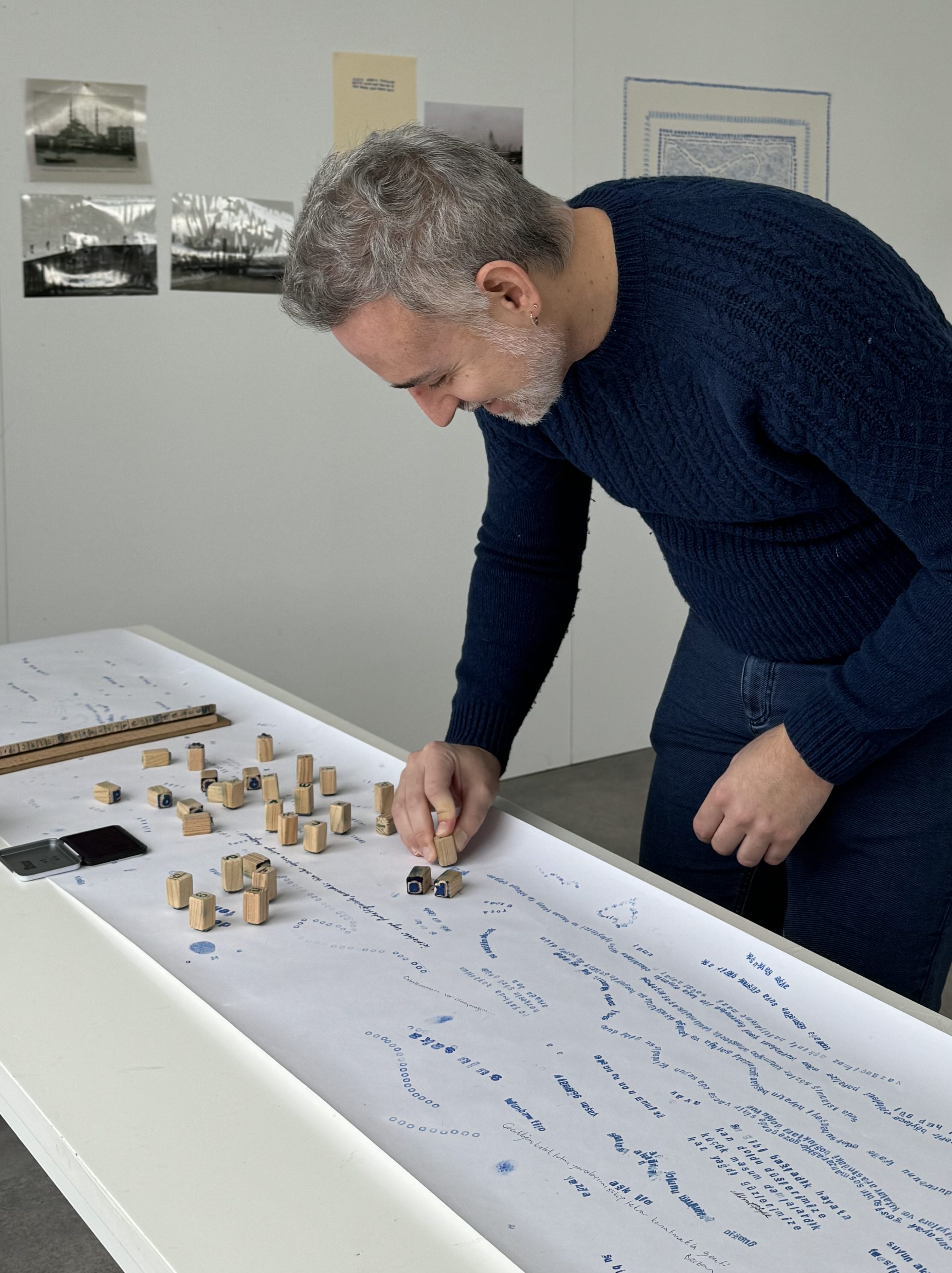
I want to extend the above-mentioned arguments to the perspective of the artist supporters, namely, sponsors and philanthropists. The arts are not something to “support.” These art lovers are not only the guardians of the virtues the arts own, but the arts have also become a handy tool to exonerate some suspicious business activities. Thus, I want to ask: Do they also share the same attitude with the public to form a specific artistic production?
The answer is complex; it requires a certain level of rigor before validating one perspective to all parties. There are implications of art-washing activities, whereas there are ethical positions of the arts to create a meaningful impact in society. Yet, both attitude shares a common ground: the market has found a new way to convert them into a commercial product; in other words, a tool for social change.
The soft power of art was explored during the Cold War period. Clement Greenberg’s promotion of abstract expressionism3, which was a rising movement in the United States at that time, was opposed to the realism embraced by the Soviet Union; and the CIA used American modern art to communicate the freedom of expression, creativity, and the cultural power of the U.S to gain control over the war.4 Today, such top-down art interventions are no longer limited to governments; philanthropists have adopted similar approaches. They saw the potential of art to suggest change in society. They established cultural organizations, foundations, and museums to display their collections, to program exhibitions, to conduct research activities addressing contemporary global issues, and to support artists in their artistic productions.
I am not advocating for a nihilistic or pessimistic approach to utilizing the arts as tools for social change, even though my previous discussion might suggest otherwise. Using the arts as a tool to create change has a delicate balance, which is prone to losing its meaning, value, and aura. I believe that there must be a balance in using the arts as a tool to create change while maintaining their artistic quality, freedom, and value.
My concern is to keep the authenticity of art production, its rhythm, and inclusiveness. The market does not prioritize the complexity of creative productions. We already lost that battle in the economic system. If the arts work for a PR campaign, it is more than enough. However, we can still strive to maintain the level of virtue that the arts embody. We can use the arts to deal with difficult and taboo subjects, while keeping their essential elements. Otherwise, the only thing left will be a package of artwork, a void, dust, and even worse, promotional material that will be thrown away along with the unwanted mess in the home. The artist should be allowed to use the time and creativity freely without expecting a concrete output. Art does not work in an output-driven way. In the past, the Medici Family left the arts and crafts people along with engineers, physicists, and chemists. Their only expectation was to live together and share their knowledge. Ultimately, they triggered the Renaissance. Who would expect it?
To conclude, positioning the arts as a tool and letting them be themselves has a fine balance. Both attitude offers benefits, yet the prior one has several pitfalls. It is the duty of the arts and culture institutions and professionals, who receive proper training in the field, to lead those who need the art as a tool to create a meaningful impact. It also should be kept in mind that art has a savage energy5 that cannot be tamed fully. We should let it flow and not block it just to achieve the desired outcome.
1- Morganna Lambeth, Heidegger, Technology and the Body, https://www.pdcnet.org/C12573E5003D645A/file/9C16D8EF50A91A6F852584AB004CBAF3/$FILE/symposium_2019_0023_0002_0030_0049.pdf
2- Ali Akay, Piyasanın Belirleyicilği, https://t24.com.tr/yazarlar/ali-akay/piyasanin-belirleyiciligi,50999
3- I wanted to share this link for those who do not have an arts background but are curious about the significance of Clement Greenberg in art history. https://www.britannica.com/art/art-criticism/Clement-Greenberg
4- Frances Stonor Saunders, Modern Art was CIA Weapon, https://www.independent.co.uk/news/world/modern-art-was-cia-weapon-1578808.html
5- The creative energy is difficult to tame or channel. I suggest that readers with an out-of-the-arts background refer to the Dionysos type of personality, as categorized by Nietzsche.
 Burak Mert